
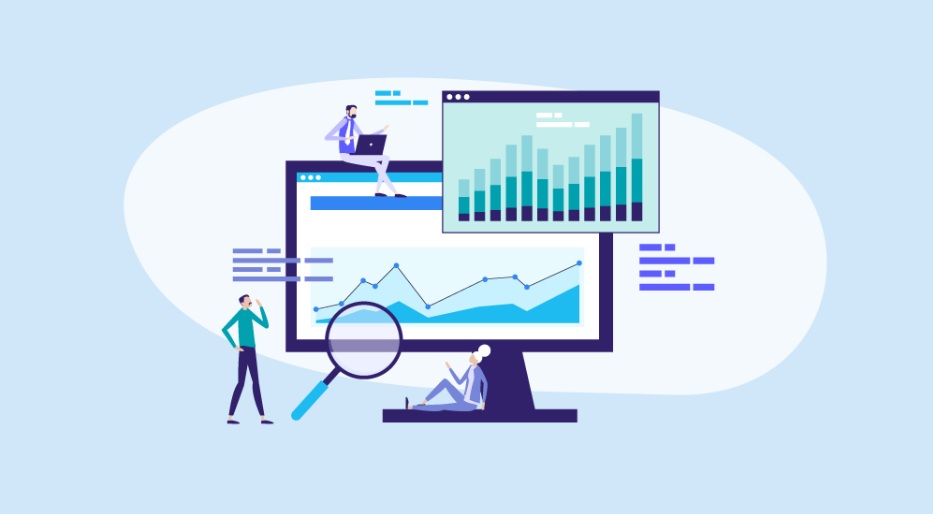
From Data Swamp to Decision Engine: How Modern Analytics Dashboards Are Reshaping Enterprise Agility
Most enterprises today are not suffering from a lack of data. They are suffering from an excess of it: petabytes collected, stored, and largely ignored while executives still open spreadsheets on Monday morning and make calls based on last quarter’s numbers.
The irony is sharp: organizations have invested millions in data infrastructure, yet the insight gap between what data could tell leaders and what it actually does tell them has never been wider.
Closing that gap requires more than better tools. It requires rethinking what an analytics dashboard is actually for.
A Dashboard Is a Decision Engine, or It Is Nothing
The word “dashboard” has been stretched to cover everything from a single KPI tile to a 40-tab reporting portal that nobody opens after the first week. What separates dashboards that transform organizations from those that collect digital dust is a fundamental difference in purpose.
A purpose-built analytics dashboard is engineered around decisions, not data.
It answers specific questions that leaders need answered daily or weekly to run the business:
- Where are we losing margin?
- Which sales territories are underperforming right now?
- Where in the supply chain are delays accumulating?
When those questions drive design, dashboards become infrastructure. When data availability drives design, they become noise.
At ASB Resources, every analytics engagement begins the same way: by working with stakeholders to define the five to seven critical decisions their function needs to make on a recurring basis.
Only then does architecture follow. This sequence is not a formality. It is the difference between a dashboard that changes behavior and one that generates a weekly PDF that nobody reads.
Four Traits That Separate Decision Engines from Reporting Tools
Across industries and functions, high-performing analytics dashboards consistently share four characteristics that their underperforming counterparts lack.
Real-time freshness
Data that is 48 hours old is not an asset in fast-moving environments, it is a liability. Modern dashboards connect directly to live data sources with automated refresh cycles, giving decision-makers confidence that what they see reflects what is actually happening.
The technical infrastructure to support this (proper data pipelines, caching strategies, refresh monitoring) is not glamorous work, but it is the foundation everything else rests on.
Role-based relevance
A CFO and a regional sales manager need fundamentally different views of the same underlying data. Dashboards built for one persona typically frustrate the other.
The principle of progressive disclosure (summary views for executives, drill-down depth for analysts, operational detail for frontline teams) is straightforward in concept but requires discipline to execute without creating a sprawling interface that nobody can navigate.
Intuitive visualization
The goal of a visualization is to make a pattern or anomaly immediately visible without requiring the viewer to do mental arithmetic.
When organizations invest in the wrong chart types, overloaded canvases, or color schemes that obscure rather than reveal, the cognitive load shifts back to the user, and adoption collapses.
Drill-down depth
Summary metrics are starting points. Leaders who spot an anomaly need to be able to follow it downstream without submitting a ticket to IT.
Self-service exploration (the ability to filter, slice, and export without writing SQL) is no longer a luxury feature. It is the mechanism through which analytics actually reaches the people closest to the business problems.
The Trust Problem Most Organizations Underestimate
Even a beautifully designed dashboard fails if users do not trust the numbers.
“Is this data current?” and “Where did this figure come from?” are the questions that kill adoption, and they surface every time a dashboard’s output contradicts someone’s intuition or prior report.
Addressing this requires deliberate investment in data trustworthiness: automated validation rules that flag anomalies at ingestion, lineage tracking that documents the transformation path from source to metric, and visible refresh timestamps that remove ambiguity about recency.
These are not afterthoughts. They are the credibility layer without which every other investment in visualization and UX goes to waste.
Organizations that ASB Resources has helped rebuild their analytics foundations have consistently found that the hardest part of the work is not the technology, it is changing the culture around data trust. Once users know they can rely on what the dashboard shows, adoption accelerates organically.
Building for Adoption, Not Perfection
One of the most common failure modes in analytics projects is the pursuit of a comprehensive solution before any working version reaches users.
By the time the “perfect” dashboard is ready, the business questions have changed, the stakeholders have moved on, and the platform has already earned a reputation as an IT project that did not deliver.
The more durable approach is iterative: identify the two or three decisions that matter most, build a focused solution that answers exactly those, get it in front of users within weeks, and refine from there.
Speed to value is not a shortcut, it is the strategy that sustains organizational commitment through the full journey from data swamp to decision engine.
This is the model ASB Resources brings to every engagement.
Whether the need is standing up a new BI environment, recruiting the specialized IT talent to run one, or auditing and rebuilding an existing analytics infrastructure, the north star is always the same: actionable insight in the hands of the people who need it, at the moment they need it.
Are your analytics dashboards actually driving decisions or just reporting on what already happened?
Let the experts at ASB Resources help you architect and staff a purpose-built analytics environment that turns your data into a real-time decision engine. Schedule a call with one of our experts today!
 The Algorithm Will See You Now: How Agentic AI Is Closing Healthcare's Critical Timing Gap with Watsonx
 The "Weekend Modernization" – How IBM Bob Transforms Complex Migrations from Months to Days