From Batch to Bolt: How Event-Driven AI Agents Are Turning Enterprise Data into Instant Action
Most enterprise AI deployed today has a timing problem that rarely gets discussed at the pilot stage. The model can be excellent: trained on years of history, validated by the risk team. But if it is reasoning on data that landed in the warehouse six hours ago, or waiting on tonight’s batch job, it is analyzing a version of the business that no longer exists.
A fraud pattern gets flagged after the funds have moved. A stockout gets identified after the shelf has gone empty. A churn signal surfaces after the customer has called a competitor. The intelligence is correct; it simply arrives too late.
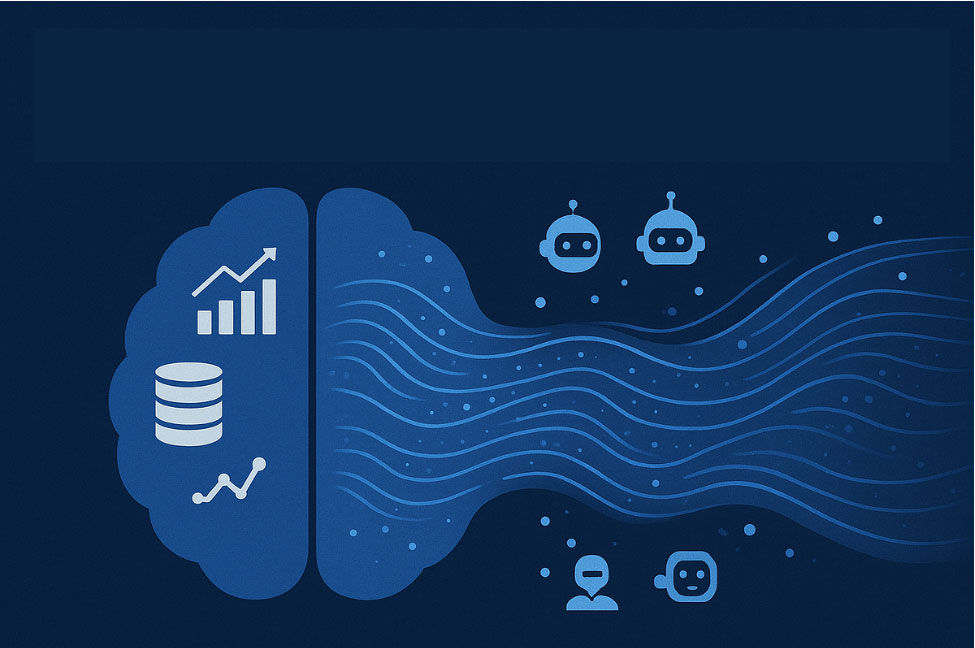
Call this the batch-to-bolt problem: an architecture issue before it is a model issue. Closing the gap between an event happening and an agent acting on it takes two things working in concert: a streaming layer that turns every meaningful change in the business into a signal the instant it occurs, and a governed control layer that can direct AI agents to act on that signal, accountably and within policy, the moment it lands.
That combination (Confluent’s real-time streaming backbone paired with IBM watsonx Orchestrate’s agentic control plane) is the architecture ASB Resources builds for clients moving from reactive AI to always-on AI.
Confluent: Giving Your Enterprise a Nervous System
Every core business event (a card swipe, a shipment scan, a sensor reading) already exists somewhere as a change in state. In a batch architecture, that change sits in a queue until the next scheduled extraction.
In an event-driven architecture built on Confluent’s Kafka-based streaming platform, the same change is published the instant it occurs, available to any downstream consumer, including an AI agent, within milliseconds.
The difference shows up hardest in the moments that matter most: a bank scoring a wire transfer before it clears, a telecom flagging SIM-swap activity before an account is drained, a manufacturer catching a sensor drifting out of spec before the line produces defective parts, a retailer seeing a branch’s stock hit zero before a customer walks away empty-handed.
Confluent turns each of these into a durable, replayable stream that agents subscribe to rather than poll for, so the fraud signal, the supply chain exception, and the churn risk indicator become triggers an agent reacts to as they happen — not line items an analyst finds in tomorrow’s report.
watsonx Orchestrate: Accountability for Your Agents
A faster feed of data only helps if something accountable is on the other end of it.
IBM positions watsonx Orchestrate as the control plane for enterprise AI agents for exactly this reason: a layer that sits above the underlying models, tools, and data sources and coordinates what they’re allowed to do.
It lets multiple agents (built on different frameworks, hosted on different platforms) collaborate on a single event without becoming an ungoverned sprawl of disconnected bots.
Orchestrate enforces policy on which decisions an agent can make autonomously versus which require a human in the loop, routes work to the right agent in real time, and keeps a full audit trail of every decision, tool call, and escalation… the difference between an agent trusted with production decisions and one confined to a sandbox.
Where watsonx.ai Fits: Acting on Judgment, Not Just Data
The event stream tells an agent that something happened. watsonx.ai is what lets the agent judge whether it matters.
Rather than checking a transaction against a fixed dollar threshold, watsonx.ai models build behavioral baselines across dozens of variables per customer, merchant, or account, and score deviations from that baseline as the event arrives… adapting to fraud tactics that did not exist the last time anyone updated a rule set.
For the compliance side, the broader watsonx platform (through watsonx.governance) generates the explanation an examiner will eventually ask for: which features drove the score, how it compares against the account’s own history, and a plain-language rationale that doesn’t require a data scientist in the room to defend it.
That combination (real-time streaming, a self-learning model, and governance built for financial services scrutiny) is what most generic AI fraud tools miss. Plenty of platforms can flag an anomaly; far fewer can produce the audit trail a regulator will accept.
Build the Team or Hire the Team: Closing the Talent Gap
Architecting this stack well takes a scarce combination of skills: engineers fluent in streaming topologies and event ordering, and agent architects who understand watsonx Orchestrate’s orchestration and governance model.
Most enterprise IT teams have one skill set in-house, rarely both, and the market for either is tight enough to stall a project for a quarter or more.
ASB Resources works with clients on both sides of that problem.
For organizations that want the system designed and deployed for them, our engineering team architects the full Confluent-to-watsonx Orchestrate pipeline directly.
For organizations that would rather recruit IT talent and build the capability in-house, our IT talent headhunting practice sources the specialized streaming engineers and agentic AI architects the project requires so leaders don’t have to hire IT talent through a generalist recruiting funnel that wasn’t built for this skill set.
How much of your enterprise’s decision-making is still running on yesterday’s data?
Let the experts at ASB Resources architect an event-driven AI agent pipeline, built on Confluent and watsonx Orchestrate, that acts the moment your data changes. Schedule a call with one of our experts today!
 The 30-Day AWS Migration Trap: How to Avoid Costly Run-Rate Blowouts with the Right Partner
 From Idea to Agent in Minutes: How IBM Bob + watsonx Orchestrate Are Closing the Enterprise AI Gap